Summer Camp
Resources
BE PREPARED
BEFORE, DURING, & AFTER CAMP
Summer camp is the pinnacle of the Scouting year-a time of growth, grit, and lifelong friendship. To ensure your unit is prepared for the trail ahead, we’ve compiled this central resource page. Whether you are heading to the mountains or the beach, these tools will help you manage the logistics so you can focus on what matters most: the Scouting experience.
For camp-specific details, menus, and schedules, please visit the Summer Program Guides.
Learn More
Before Camp
What to Know Before You Go A smooth camp experience starts at home. Use this checklist to ensure your unit is ready before pulling into the parking lot. These foundational steps help your Scouts hit the ground running the moment they arrive.
Key Action Items:
-
Documentation: Confirm that all Scouting medical forms are completed and signed.
-
Finalize Your Roster: Double-check your online registration. Ensure that all participants going are offically registered members of your unit and listed in your my.scouting unit roster. All overnight adults must be currently SYT-trained and registered with Scouting. *Limited exception for Cub Scout overnight Programs.
-
Program Readiness: Complete merit badge sign-ups and review any prerequisites in the Program Guides.
-
Logistics & Travel: Prepare your transportation plan, finalize camp payments, and communicate arrival & departure expectations to your families.
Preparing the Troop for Success
As a Senior Patrol Leader or Patrol Leader, your job is to get the unit hyped and organized. A prepared Troop has more time for fun!
-
Gear Check: Hold a “Pack-at-the-Meeting” night. Make sure every Scout has the 10 Essentials and proper footwear.
-
Program Planning: Review the
Program Guide -
Set the Standard: Let your peers know what camp life is like and review the Expectations & Guidelines. You lead by example from day one.
Getting Your Scout Ready
Preparation at home ensures your Scout has a safe, fun, and successful week. Focus on the “Big Three”: Medicals, Gear, and Expectations.
-
The Health Form: Complete Parts A & B as the parent/guardian. Part C is required to be filled out and signed by a doctor for ScoutsBSA summer camps and events longer than 72 hours.
-
Smart Packing: Review the
Suggested Packing List. -
Prerequisites: Check if your Scout’s chosen Merit Badges have “home requirements” that must be finished before arrival.
-
Communication: Have the Summer Camp Parent Quick Reference filled out so you know how to stay in touch.
Plus check out Tips for first-time campers who are new to the Cub Scout family
Join our camp leadership for a live informational session and Q&A. These virtual open houses are designed to be a “one-stop shop” for parents and leaders to get the latest camp updates and have their specific questions addressed in real-time. Click below to learn more and sign up.
Links
During Camp
Leading from the Back
Your primary role is health, safety, and morale. Let the youth leaders run the program while you focus on hydration, sunscreen, and the “pulse” of your unit.
Daily Leader Meetings
Attend the daily morning meeting (often called the “Cracker Barrel” or Leader Meeting) to get schedule updates, weather alerts, and program changes.
Mid-Week Advancement Check
Don’t wait until Friday. Check in with the camp office or area directors mid-week to ensure your Scouts’ requirements are being recorded correctly.
Enjoy Yourself!
There are plenty of activities and opportunities reserved just for adults to enjoy, make sure to check the Summer Program Guide for more details.
Own the Program
You are the primary point of contact for the camp staff. If your unit needs something or the schedule is confusing, you are the one to speak up.
The SPL Meeting
This is where the magic happens. Attend the daily SPL meeting to coordinate inter-troop competitions, campfire skits, and service projects.
Set the Tone
From campsite cleanliness to uniforming and spirit, your Scouts will follow your lead. Keep the energy high.
The “No News is Good News” Rule
Camp is a time for Scouts to build independence. Unless there is an emergency or a health issue, assume your Scout is having the time of their life.
Communication
Mail can take a long time to reach remote camps. If you want your Scout to get a letter, mail it before they even leave home.
Visitors
Please review the camp’s visitor policy & check-in procedures to ensure the safety of all participants.
Links
After Camp
Finalize Advancement
Verify and download all records within the registration before you leave; these are final once the session ends.
Gear Maintenance
Ensure all unit equipment is cleaned and thoroughly dried before storage to prevent mold.
Plus check out this article on What smart Scout Leaders do Right After Summer Camp
Unit Reflection
Lead a “Roses and Thorns” session at your next meeting to discuss what went well and what to change for next summer.
Keep Momentum
Use the new skills and spirit from camp to plan your unit’s fall outdoor schedule.
The “Camp Funk”
Wash everything—including the sleeping bag—immediately to clear out the trail dust and woodsmoke.
Decompression
Expect an exhausted Scout. Focus on hydration, a long shower, and listening to their stories as they catch up on sleep.
Links
Summer Camp Program Guides
Each summer camp has its own program guide webpage. This is where you can find detailed information that is specific to the camp you are attending. This includes details such as merit badges, activities, daily schedules, menus, and more.
Program information for the upcoming summer is released in April. Until then, current content reflects the previous summer and offers a general overview of what to expect.
Links
Travel & Packing
Whether you’re traveling by plane, train, or automobile—here’s what you need to know to get to camp safely and confidently. Plus helpful packing lists and tips.

Safe transportation is essential when traveling to camp. All drivers should follow Scouting guidelines for seatbelts, supervision, rest breaks, and vehicle safety. Before hitting the road, review the official resources below to ensure your trip meets Scouting’s safety standards.
Helpful Tips:
Directions to Camp
Follow posted signs and check for GPS accuracy, as some rural routes may differ. Limited cell service is near camp entrances, so plan accordingly.
- Butte Creek – Google Maps Directions
- Camp Baldwin – Google Maps Directions
- Camp Meriwether – Google Maps Directions
- Camp Pioneer – Google Maps Directions
Car / Van Rentals
For Scouting trips, use the Scouting America discount code XZNCBSA for reduced rates at Enterprise Rent-A-Car. Other options—including Costco Travel, corporate or government employee discounts, and rental companies like Avis, Hertz, and Alamo—can sometimes offer lower prices.
 Major airlines offer group rates for 10+ passengers with flexible payment options. A single contact coordinates travel, and tickets are issued electronically. Group fares generally do not allow miles, points, or upgrades. To book, be ready with; number of passengers, dates, and point of contact.
Recommended Airports
- Portland International Airport (PDX) — closest major airport
- Redmond Municipal Airport (RDM) — alternative for Baldwin or Pioneer

These bus companies regularly work with Scout groups and are familiar with our camps. Operating out of Portland, including the airport and train station, they can be contacted directly to arrange your trip. Include your group size, dates, and point of contact when booking.
|
|
Motor Coach West
|



Amtrak service is available to Portland, or across the river to Vancouver, WA, and group discounts may apply. Youth traveling within Washington State can ride for free on select routes. Be sure to plan your arrival from the train station to camp in advance by chartering a bus or vehicle rental.
Helpful Tips:
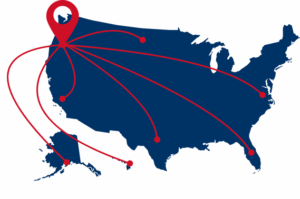
Units traveling longer distances may choose to arrive early on Saturday, prior to the normal Sunday check-in times around noon.
A flat early-arrival fee applies per unit and is payable on the registration. Units are responsible for their own meals until Sunday dinner, with one exception: Camp Meriwether offers an optional weekend meal service covering three meals prior to Sunday dinner. This option is priced per person and payable on the registration.
Early Arrival Check-in: Saturday Evening 5-7 PM
Note: Please plan unit-led games and activities as all program areas are closed on Saturdays.

For guidance and best practices when traveling internationally with Scouts, contact the Scouting International Committee: Scouting International Travel
Helpful Tips:
-
Review the suggestions for Traveling Overseas with Scouts and Venturers
-
Coordinate early with your unit and local council for passports, visas, and required documentation.
Maps
packing
Expectations & Guidelines
WELCOME TO CAMP. YOU BELONG HERE, ALL ARE WELCOME HERE.
The Scout Oath and Law and the Scouter Code of Conduct are the bedrock of our camps. They provide the most important guidelines for how we treat others and how we live our lives. We encourage every Scout and Scouter to know these well and let them guide all that you do in life.
A few important reminders are provided below to ensure safety and clarity in all our activities. Any rules that are location-specific to one camp can be found on that camp’s Summer Program Guide.
A Scout is Friendly
We foster a community of belonging. Bullying, hazing, or exclusionary initiations of any kind are strictly prohibited. We maintain a zero-tolerance policy for those who participate in or enable such behavior.
A Scout is Courteous
Respect is the foundation of our camp. Treat all property—whether personal, public, or Scouting-owned—with care. Vandalism and defacement are unacceptable. Scouts are expected to take full responsibility for any damage they cause, whether accidental or intentional.
A Scout is Kind
Kindness extends to every person and the environment around us. A Scout acts with empathy and ensures their actions do not cause unnecessary harm to any living thing or the natural world.
Boundaries
For the safety of all participants, please adhere to the following:
-
Stay Within Bounds: Do not wander off-property or enter restricted areas.
-
Sign-In/Sign-Out: All guests and participants must check in and out with staff when arriving at or departing from the property.
-
Personal Space: Respect the physical and emotional boundaries of others at all times.
Use the Buddy System
Safety is a team effort. No Scout should ever be alone.
-
Groups of Two: Must be of the same gender.
-
Groups of Three: Required if the group is mixed-gender or if a same-gender pair is not possible.
Roster
All participants must be listed on the registration, this serves as the roster of who is attending and authorized to be on-site.
All relevant information including emergency contact information for each person should be filled out.
Youth
Youth must be registered Scouting America members to participate & enjoy summer camp programs.
Adults
Supervision of all Scouting activities must include qualified, registered, adult leadership in each unit.
- Two registered adult leaders 21 years of age or over are required at all Scouting activities.
- There must be a registered female adult leader 21 years of age or over in every Unit serving females.
- Cub Scout Packs must have a ratio of one adult for every four youth. Tigers (1st graders) must have their adult partner present.
Overnight Adults
All adults staying overnight in connection with a Scouting activity must be currently registered in Scouting.
Must be registered as an adult volunteer or an adult program participant and must have completed current (non-expired) Safeguarding Youth Training prior to the event.
Adult volunteers must register in the position(s) they are serving in. Registration as a merit badge counselor position does not meet this requirement.
- See FAQ for list of approved adult registration fee required positions.
- Limited exception for Cub Scout overnight Programs
Health & Permission Forms
All participants in all Scouting activities must have an annual Scouting Medical Form filled out and signed within the last 12 months.
- The Scouting Medical Form is the primary informed consent, release agreement, and authorization that each participant or parents/legal guardians for youth, must fill out and sign for summer camp.
- OPTIONAL: Outside Providers Permission Forms – Outbound Trip Programs that are using a outside provider may require a separate parental permission form, these can be found on the camp’s Summer Program Guide.
NOTE: A Parental Firearms Permission Form Is NOT required in the state of Oregon. Parent/legal guardian of youth may check the box on Part A of the Scouting Health form if you DO NOT want your child to use a BB device only.
Insurance
Units must have unit accident & sickness insurance in effect at time of activity.
Check with your local council about your unit’s insurance coverage. Cascade Pacific Council Units have accident & sickness insurance provided automatically as part of the membership fee.
Alcohol, Marijuana, & Drugs
The possession or use of alcohol, marijuana, illegal drugs, and controlled substances – including the misuse of prescription medication – is strictly prohibited at all Scouting events with a zero-tolerance policy.
Tobacco Products
The use of tobacco products – including cigarettes, cigars, pipes, chewing tobacco, and electronic vaping devices – is permitted only in designated areas and never in the presence of youth. It is illegal for anyone under 21 to use tobacco in Oregon & Washington. Quitting isn’t easy, but you don’t have to do it alone. Learn more at
Weapons
No weapons of any kind are permitted on property and may not be stored in personal vehicles. Personal equipment is not permitted on camp ranges (e.g., personal bows, firearms, etc.).
Pocket Knives
Knives and multi-tools are allowed for Scouts who have earned their Totin’ Chip or Whittling Elective for Cubs.
Choosing the right equipment for the job at hand is the best answer to the question of what specific knife should be used.
We neither encourage nor ban fixed-blade knives nor do we set a limit on blade length. Since its inception, Scouting has relied heavily on an outdoor program to achieve its objectives. This program meets more of the purposes of Scouting than any other single feature. We believe we have a duty to instill in our members, youth and adult, the knowledge of how to use, handle, and store legally owned knives with the highest concern for safety and responsibility. Remember – knives are not allowed to be taken aboard commercial aircraft.
Fireworks/Explosives
Fireworks or explosive materials are strictly restricted and there is a zero-tolerance policy for any unauthorized person(s) found in possession or use of these items.
Chemical Fuels
Gas-fueled lanterns and stoves (canister type fuels are recommended over liquid) may be used for outdoor lighting and cooking only. The use of gas-fueled lanterns and stoves indoors, in any tent, adirondack, or structure, is strictly prohibited. All fuel containers not in use must be stored in the designated gas shack. A responsible adult, who is knowledgeable in safety precautions, must do lighting and refueling; fuel is never to be handled by youth. The use of liquid fuels as a fire-starter is strictly prohibited.
Fires & Firewood
To keep Oregon green and maintain healthy forests, outside firewood is prohibited. There is plenty of downed wood around camp to use as firewood and bundles are also available for purchase on-site. Please make sure to follow Campfire Safety Guidelines including that all fires must be kept small, supervised by an adult, and never left unattended before being fully extinguished that is cold to the touch. Chainsaws are not permitted by any person except Camp Rangers.
Note: We are often under a fire ban during summer months, so be prepared with alternatives.
Pets
Participants or visitors may not bring pets or emotional support animals of any kind. Service animals trained to provide a specific and medically documented service must be pre-approved ahead of time before being brought on-site. Any animal not approved in advance will need to be removed immediately.
Vehicles
Personal vehicles are for transportation to and from the event only and must remain parked in designated parking areas. Personal vehicles are not to be used during the event.
Note: Participants who possess a valid DOL mobility parking pass may receive an in-camp vehicle permit from the Camp Director.
Important: Not each camp and not all areas in a given camp are accessible by vehicle. A permit allows for travel on maintained camp roads only; it does not guarantee vehicle access to every campsite or program area.
RVs, ATVs, etc.
The use of RVs, ATVs, UTVs, Golf Carts, Snowmobiles, etc. are strictly prohibited on property at any time. There are no RV hookups or utilities onsite. Those wishing to stay in a RV can find several public RV campgrounds near camp.
Drones
Drones are not permitted on property.
Valuables
Valuable items should not be brought or stored onsite. The event and its staff are not responsible for lost, damaged, or stolen items.
Links
Health & Safety
GET CLEAN, GET HYDRATED, GET GRIT.
The Scouting adventure, camping trips, high-adventure excursions, and having fun are important to everyone in Scouting – and so are your safety and well-being.
In Scouting, we will not compromise the safety of our youth, volunteers, and employees. Safety is a value that must be taught and reinforced at every opportunity. We are all responsible and must hold each other accountable to provide a safe environment for all participants.
Additional information that is location-specific to one camp can be found on that camp’s Summer Program Guide.
- Medical Form
- Medications
- Medical Check & Illness
- Swim Tests
- Natural Disaster Preparedness
- Wildlife Safety
- Visitors & Security
- Scouting's Barriers to Abuse
- MESH
Completing the Annual Health and Medical Record is the first step in making sure you have a great Scouting experience.
All participants in all Scouting activities must have an annual Scouting Medical Form filled out and signed within the last 12 months.
Download Scouting Medical Form Parts A&B
for Butte Creek Cub Scout Camp and camps shorter than 72 hours.
Download Scouting Medical Form Parts A,B,&C
for Baldwin, Meriwether, Pioneer, Webelos, and camps longer than 72 hours.
Parts A & B (must be filled out by all participants; youth and adults)
Part A: is an informed consent, release agreement, and authorization that needs to be signed by every participant (or a parent/legal guardian for youth).
Part B: is general information, health history, medications, and emergency contacts.
Part C (for ScoutsBSA camps, Webelos, high adventure programs, & anyone staying 72+ hours)
Part C: is a Pre-Participation Physical and must be completed and signed by a certified and licensed physician; MD, DO, NP, or PA.
Note: Your primary care physician is the most common way for completing Part C forms. If you have difficulty scheduling an appointment, consider visiting an urgent care center or a walk-in clinic, such as CVS Minute Clinic, many of which offer physicals. You may also want to check with your local health clinics for availability.
What is meant by “Annual”?
An AHMR is valid through the end of the 12th month from the date it was administered by your medical provider. For example, a physical administered December 3, 2019, would be valid until December 31, 2020.
Additional Resources
Get Answers to Frequently-Asked Questions about the Annual Health and Medical Record
Read about important medical risk factors.
Download the instruction handout.
Youth Medications
All medications for youth participants, including over-the-counter (OTC) items, must be administered by an adult leader.
Adult Medications
Participants aged 18 and older may self-administer their own medications, provided they follow all storage and security requirements listed below.
Original Containers Only
All medications must be in their original pharmacy-labeled container. The label must include the camper’s name, drug name, dosage, and prescribing physician’s instructions.
Mandatory Documentation
- Medication Logs: An adult must fill out the Drug Administration Record log to track doses during the week for their unit.
- Scouting Medical Form: Participants must list all medications, including any over-the-counter on Part B of the Medical Form.
Note: A parent/guardian must authorize by checking the box and indicating which non-prescription medications administration is authorized on Part B of the Scouting medical form.
Safe Storage
Medications must be stored securely under lock and key and administered under direct adult observation. A lock box is provided in each campsite. Medications requiring refrigeration may be kept in the Health Lodge.
Emergency Medications
Participants must carry life-saving medications on their person at all times for immediate use. This includes:
-
Epinephrine auto-injectors (EpiPens)
-
Rescue inhalers
-
Insulin and diabetic supplies
-
Emergency allergy medications
If a participant self-administers emergency medication, they must notify an adult leader or the Camp Health Officer immediately.
Drug Holidays & Misuse
Summer camp is not the time to stop or alter the dosage of a prescription medication unless specifically directed by a healthcare provider. The camp environment is physically and mentally demanding and vastly different from home.
Any person found misusing prescription medications or sharing medication with others will be sent home immediately.
The Arrival Medical Check
Upon arrival at camp, all participants (Youth and Adult) must undergo a mandatory medical screening.
Participants who do not have a completed and signed Scouting Medical form or who are exhibiting symptoms of illness will be sent home immediately. Please double-check all forms and symptoms before departing to camp.
Pre-Camp Health Screening (48-Hour Rule)
To maintain a healthy environment for everyone, do not bring any youth or adult to camp if they have experienced any of the following within 48 hours of arrival:
-
Fever, chills, or sweats
-
Vomiting or diarrhea
-
Symptoms of contagious conditions (e.g., Pink Eye, undiagnosed rashes)
Prevention & Hygiene
The most effective way to prevent the spread of illness is consistent hand washing.
Sanitation
While soap and water are provided at hand washing stations, we also encourage you to carry supplemental hand sanitizer for use during transition times between activities or on treks.
Personal Responsibility
Each person and the unit leadership must supervise hand washing within their group, especially before every meal.
Illness During Camp
If a participant begins to exhibit signs of illness while at camp, the Health Officer will perform an assessment. If symptoms are deemed contagious or severe, the individual will be required to leave camp.
Every unit must have a pre-arranged plan to transport an ill participant home or to have them picked up promptly by a parent/guardian.
All participants wishing to participate in waterfront activities must complete a swim test at camp. We do not accept pre-camp swim checks. Participants can take their swim test during the Camp Tour or during open swim throughout the week.
Note: If you’re planning on doing water-based Merit Badges, taking out a boat, or going on a water based outbound trip, you must pass at the Swimmer level to participate.
* Butte Creek Cub Camp does not offer swimming or boating programs.
Swim Test
We’ll check your skills with the standard Scouting swim test and you will be put into one of three levels, there also offer basic swim instruction during the week
Swimmers Classification Level
Jump feet first into water over the head in depth. Level off and swim 75 yards in a strong manner using one or more of the following strokes: sidestroke, breaststroke, trudgen, or crawl; then swim 25 yards using an easy resting backstroke. The 100 yards must be completed in one swim without stops and must include at least one sharp turn. After completing the swim, rest by floating.
Beginners Classification Level
Jump feet first into water over the head in depth, level off, and swim 25 feet on the surface. Stop, turn sharply, resume swimming and return to the starting place. Anyone who has not completed either the beginner or swimmer tests is classified as a nonswimmer.
Nonswimmers Level
If you’re not a fan of the deep end or just want to splash around, this is for you. You’ll stay in the shallow area (waist to chest deep).
The safety and well-being of our Scouts, adult leaders, and staff are our highest priorities. We maintain a comprehensive emergency response plan tailored to the unique geography of our camp properties. We work closely with local experts and agencies to ensure our camps remain a safe environment for outdoor adventure.
Proactive Monitoring and Partnerships
We monitor conditions 24/7 throughout the summer season to stay ahead of potential risks.
- Wildfire Monitoring: Staff utilizes real-time data from the National Weather Service and state forestry departments. We maintain direct communication with regional foresters and wildfire mitigation crews regarding local fire conditions and Red Flag warnings.
- Coastal Monitoring: For our camps located in coastal areas, we monitor the National Tsunami Warning Center and local emergency management channels to stay informed of any seismic or coastal alerts.
Preparedness and Training
Preparedness is built into the first day of the camp experience to ensure a calm and orderly response to any incident.
- Arrival Day Drills: Within 24 hours of arrival, every camper and leader participates in mandatory drills. This ensures everyone knows the location of their assembly points and the sound of emergency signals.
- Trained Leadership: Staff is trained in Incident Command protocols, working in coordination with local law enforcement and fire agencies to manage groups efficiently.
Response and Evacuation Protocols
In the event of a potential emergency, staff follows the strict guidance and authority of local law enforcement and fire agencies.
- Expert Guidance: Decisions regarding evacuations are made in direct coordination with local law enforcement. If an evacuation is recommended or ordered, we follow their designated routes and timing exactly.
- Designated Safe Zones: Each camp has identified rally points and “High Ground” locations (for coastal sites) that have been vetted by local emergency services.
- Coordinated Movement: We work directly with local authorities to manage transportation and ensure all participants are moved to safety in an organized manner.
Emergency Communication and Phone Trees
Clear communication is vital during an incident. We utilize a multi-step process to keep families informed:
- Direct Contact: As soon as a situation allows for safe communication, staff will begin contacting unit leadership to provide status updates.
- Unit Phone Trees: Each attending unit (Troop, Pack, or Crew) should have an internal “Phone Tree” established before arrival. Once the unit leadership is notified by staff, they will activate their phone tree to ensure all families in their unit receive the information quickly.
Camp Closures and Continuity
Sometimes the safest decision is to close a camp before an incident occurs—such as during periods of poor air quality or extreme weather warnings.
- Preemptive Action: We will always err on the side of caution. If air quality (AQI) or geographic proximity to a hazard poses a risk, the camp will be closed.
- Rescheduling: If a wildfire or other natural disaster forces a closure, staff will work with your unit leadership to reschedule your session or transition your unit to one of our alternative camps if possible.
Safety Around Animals at Camp
Summer camp offers the incredible opportunity to observe birds, fish, and wildlife in their natural habitat. Seeing a squirrel or even a eagle can create a lifelong memory. To ensure these memories stay positive for both you and the animals, please follow these stewardship guidelines.
General Wildlife Guidelines
- Keep Your Distance: Never approach, follow, or circle a wild animal. If an animal is “passive” or calm, it does not mean it is safe to approach.
- Hands Off: Never attempt to pick up or tease wildlife. If you find a young animal alone, leave it be; a protective mother is likely nearby.
- Watch Your Body Language: Avoid aggressive behavior like direct eye contact (even through a camera lens) or walking directly toward an animal.
- Ethical Photography: Only take photos if you can do so without disturbing the animal or altering its behavior.
- Stay on Track: Stick to designated trails and avoid berry patches or dead animals, as these are primary food sources.
Food Storage & Campsite Care
- The “Smellables” Rule: Never keep food, trash, or “smellables” (toiletries, mints, etc.) inside your tent.
- Clean As You Go: Clean all tables, grills, and utensils immediately after use. Do not dump food scraps or fat drippings in fire pits or the woods.
- Zero Interaction: Do not feed wildlife or leave food out to attract them. Take trash to designated dumpsters frequently.
Health & Safety Protocols
- Report Sightings: If you spot a potentially dangerous animal, notify the Camp Ranger or Director immediately.
- Avoid Sick Animals: Stay away from animals acting strangely or showing no fear of humans.
- Hygiene: If you come into contact with a wild animal or scat (droppings), wash your hands thoroughly. If you feel sick after contact, notify your leader or the Camp Health Officer immediately.
Special Note: Bats
- No Contact: Campers must never attempt to touch or catch a bat.
- Immediate Action: If you come into physical contact with a bat—especially if bitten—report to the Camp Health Officer immediately. All bat-related incidents must be reported to the local health department by staff.
For the safety of all participants, all visitors must check in at the Camp Office immediately upon arrival. If a visitor is not listed on a Unit’s official roster, a registered adult leader from that Unit must come to the office to verify the visitor’s identity before they are allowed into camp.
Guest Fees
Day visitors may pay the guest meal fee in the office at check-in
Adult visitors planning to stay overnight must be included in the online registration ahead of time, pay the overnight fee, and have their Scouting membership verified.
Youth visitiors or adults not registered in Scouting may not stay overnight. There are several public campgrounds near each camp.
Sign-In/Sign-Out Procedures
To ensure an accurate headcount for emergency responses, all Scouts, adult leaders, and guests must sign in when entering camp and sign out when departing at the Camp Office.
Adult Leadership Coverage
Adult leaders may leave and return to camp as needed, provided the Unit always maintains enough registered adults on-site to meet Two-Deep Leadership requirements.
Early Departures & Youth Pick-Up
Scouts departing camp early must leave with a parent, guardian, or an authorized individual listed on their Medical Form.
Verification
If a Scout is being picked up by someone not currently camping with the Unit, a Unit leader must come to the office to verify the person’s identity before the Scout is cleared to depart.
A Scouter is S.A.F.E.
-
S = Supervision: Youth are supervised by qualified, trustworthy adults.
-
A = Assessment: Activities are assessed for risks during planning and mitigation, or the activity risks are avoided.
-
F = Fitness and Skill: Fitness and skill level has been determined for each participant and is appropriate for them to participate safely.
-
E = Equipment and Environment are safe and appropriate.
Registration (Requirements)
-
Adult program participants must register as adults and follow Youth Protection policies.
Adult Supervision
-
Two registered adult leaders 21 or older for all Scouting activities. One must be a registered female adult leader if a female youth is present.
-
No 1-on-1 interactions with youth by phone, text, or in person.
-
Scouting overnight: Every adult must be registered. Only Cub Scouting has an exception for parents or guardians.
Discipline
-
Discipline must be constructive and reflect Scouting’s values.
Responsibility
-
All participants abide by the Scout Oath and Scout Law. Adult leaders must follow the Scouter Code of Conduct.
-
Everyone shares in the responsibility for the safety of all participants in the program.
Accommodations
-
Separate accommodations are required for adults and youth as well as male and female.
Program Requirements For Prevention
-
Buddy system
-
No cameras or digital recording devices near bathrooms/shower houses or anywhere privacy is expected.
-
Transparent program with parent involvement.
-
No secret organizations.
-
No hazing or initiations.
-
Bullying of any kind is prohibited.
-
Inappropriate public displays of affection are prohibited.
-
Sexual activity is prohibited.
-
Appropriate attire is required.
Reporting Requirements
-
If you see or suspect abuse, YOU must report it. THIS CANNOT BE DELEGATED.
-
Call local law enforcement. If someone is in immediate risk of harm, call 911.
-
Then call your Scout executive. If they are not available, contact Scouts First Helpline.
Scouts First Helpline
If you cannot reach your council but need immediate assistance in handling a sexual abuse allegation or serious Youth Protection violation, submit report anonymously by text or phone call to 1-844-SCOUTS1 or 1-844-726-8871.
Thoughts of harming oneself or suicide, contact the Suicide & Crisis Lifeline at 988.
Mental, Emotional, & Social Health
Think U • S • A when helping others with MESH.
-
U stands for Understand the behaviors to watch for
-
S stands for Speak to Scouts and provide Support
-
A stands for Advocate and Act when needed
The transition to camp can be a big adjustment. Between a new environment, a busy schedule, and being away from home, it’s normal for Scouts (and leaders) to feel overwhelmed. We are committed to supporting the “whole Scout.”
Conversation Starters
Difficult topics can be tough to talk about. Begin with these ideas.
-
Can you tell me what happened?
-
Can you tell me about it?
-
Is this a new feeling or have you felt like this before?
-
How can I help?
-
What have you tried in the past that helped?
-
What didn’t go well today?
-
What did go well today?
-
What are you looking forward to?
Promoting a Positive Environment
-
Inclusion: Every Scout deserves to feel welcome. We expect all participants to follow the Scout Law by being kind and friendly to everyone, regardless of their background or experience level.
-
Homesickness: This is a natural part of the camp experience. Unit leaders should stay observant and offer support. If a Scout’s homesickness becomes unmanageable, please consult the Camp Health Officer or Camp Director for strategies to help them succeed.
-
Is the Scout…
-
Sleeping well?
-
Eating well?
-
Socializing?
-
Enjoying activities?
-
Engaging in self care? (Showering, Personal hygiene, Hydrating)
-
Do they have a positive attitude?
-
Participating with their unit or others?
The more yes answers, the less likely a Scout will miss home. Keeping everyone engaged in appropriate activities will lead to a more positive experience. Be supportive.
-
-
Digital Detox & Social Media
To support mental health and foster real-world connections, we encourage a “Digital Detox” while at camp.
-
Focus on the Present: Constant connection to home via cell phones can often increase homesickness and prevent Scouts from bonding with their Unit.
-
Unit Policy: We recommend that each Unit sets clear expectations for phone use (e.g., phones stay in the personal locker or tent except for specific times).
-
Privacy & Safety: Please remind Scouts that taking photos or videos in bathrooms, changing areas, or tents is strictly prohibited.
Rest & Decompression
Camp is physically and mentally demanding. To keep everyone at their best:
-
Quiet Hours: Please respect designated quiet hours (10:00 PM to 7:00 AM). Adequate sleep is the best defense against stress and irritability.
-
Downtime: While the schedule is packed, we encourage units to build in “down” time for Scouts to relax, reflect, or just hang out in their campsite.
Mindfulness Activities
Any positive activity will be beneficial to draw a Scout’s attention from negative thoughts and feelings. Be creative in getting a Scout active in positive experiences.
- Hiking/walking
- Play games/card games
- Talk to friends
- Involve them in unit activities
- Journaling
- Bird or nature watching
- Mindful breathing (Breathe in for 4 counts; hold breath for 4 counts; exhale for 4 counts)
Support
-
The “Check-In”: We encourage Unit Leaders to do a quick “pulse check” with their Scouts daily. Ask how they are doing, not just what badges they are earning.
-
Staff Help: Designated camp staff members are trained to assist with MESH concerns. If a Scout is struggling with anxiety, sensory overload, or significant social conflict, please let us know early so we can help.
Safety Moments
Resources
Stress Management – Video on stress management.
The Importance of Sleep – Video on the importance of enough sleep.
Mental Health First Aid Training Courses
How Right Now – Campaign designed to promote and strengthen emotional well-being.
Jed’s Foundation Mental Health Resource Center
Scouts First Helpline 844-SCOUTS1 (844-726-8871) – A dedicated 24-hour helpline to receive reports of known or suspected abuse or behavior that might put a youth at risk.
988 Lifeline – If you need to talk, the 988 Lifeline is here. Call, text, or chat.
Links
Special Needs & Food
To provide a safe and inclusive environment, we require all specialized needs to be documented in the online registration no later than two weeks prior to arrival.
Late Notifications: Requests made less than 14 days prior or at check-in cannot be guaranteed.
Updated menus are posted in April on the Summer Program Guide. Menu items are subject to change based on supplier availability.
Menu Tracks
In addition to the standard meal plan, the kitchen provides standard substitutions for these diets only:
- Gluten-Free
- Dairy-Free
- Vegetarian
We are unable to accommodate restrictions outside of these three options. Participants with multiple allergies or complex medical diets must provide their own supplemental food.
Severe Allergies & Specialized Diets
Participants with severe/complex allergies or requirements beyond the three options above must provide their own supplemental food. Dedicated refrigerator, storage space, and a microwave are available in the Dining Hall. All personal food must be in sealed, labeled containers (Name & Unit #).
No Fee Adjustments
Standard camp fees apply to all participants. No discounts or refunds are provided for individuals who bring their own food.
Nut Policy
No peanut or tree nut products are used in meal preparation in the kitchen.
Note: While the kitchen is a nut-free facility, we cannot guarantee a 100% allergen-free environment due to the nature of communal dining and pre-packaged items sold in the Trading Post. Individuals with high-sensitivity airborne allergies should consult with the Camp Director.
Campsites
All campsites are primitive and do not have electrical power.
Equipment
CPAP users are responsible for bringing their own portable battery power systems.
Charging
Batteries may be dropped off at the Dining Hall for recharging during daylight hours.
Safety
Running extension cords from buildings to tents is strictly prohibited.
Campsite Assignments
Units with participants requiring mobility accommodations (e.g., flatter terrain or proximity to the Dining Hall) must note this in the online registration by the two week deadline.
Transportation & In-Camp Permits
Personal golf carts or ATVs are not permitted. Participants who possess a valid DOL mobility parking pass may receive an in-camp vehicle permit from the Camp Director.
Important Note: Not each camp and not all areas in a given camp are accessible by vehicle. A permit allows for travel on maintained camp roads only; it does not guarantee vehicle access to every campsite or program area.
Links
Camp Fees & Financial Aid
Finding Your Specific Camp Fee
Because each camp and program is different—and costs vary based on session, when you sign up, and if you are a CPC unit—the most accurate fee will be shown on the camps registration page while signing up.
The Value of Camp
Summer camp is the pinnacle of the Scouting year—a time of growth, grit, and lifelong friendship. Our staff works diligently year-round to ensure we offer a top-tier program with the highest standards of safety and excellence, while continuously striving to keep camp fees as low as possible.
Our Mutual Commitment
To provide these experiences, we must commit financial resources months in advance to employ staff, purchase food and supplies, and secure permits. Because of these upfront costs, we ask our units to treat their registration as a firm commitment.
Deposits
All deposits are non-refundable as they secure your spot and allow for early-season operations.
Timely Payments
Each unit and participant is responsible for meeting the
A Scout is Thrifty
We believe every Scout should have the opportunity to earn their own way to camp and that finances should never be a barrier to attending.
Earning the Adventure
Fundraising isn’t just about the cost; it’s a chance for Scouts to set goals and build confidence. From popcorn and camp cards to unit-led projects like Christmas tree lots, there are many ways to make camp affordable.
Contact your local Council to find the best fundraising fit for your unit. Cascade Pacific Council units may connect with their District Executive.
Financial Assistance
No Scout should stay home for lack of funds. Discounts and financial aid are available, including in-council rates, early bird pricing, and financial aid for CPC youth in the form of Camperships.
The Value of the Experience
We strive to keep camp fees as low as possible while maintaining the highest standards of safety and excellence. View the
To help us keep camp fees low by avoiding high processing fees, please use our preferred payment method:
eCheck/ACH Bank Deposits (preferred method with no fee)
Payments via eCheck ACH or paper checks mailed or dropped off incur no convenience fees.
Note: Learn how to use eCheck ACH payments here: How to Pay by eCheck
Credit/Debit Cards
Card transactions are subject to a convenience fee charged to by our third-party payment processor.
At-Camp Spending
While most program costs are covered, some specialized activities may have additional material fees. We recommend sending $75–$100 per youth for snacks, souvenirs, and Trading Post items. Check the camp’s
Links

Contact

Outdoor Programs & Properties Team
9700 SW Nimbus Avenue
Beaverton, OR 97008-7172
492.camping@scouting.org | (503) 225-5701